Struggle Is Art
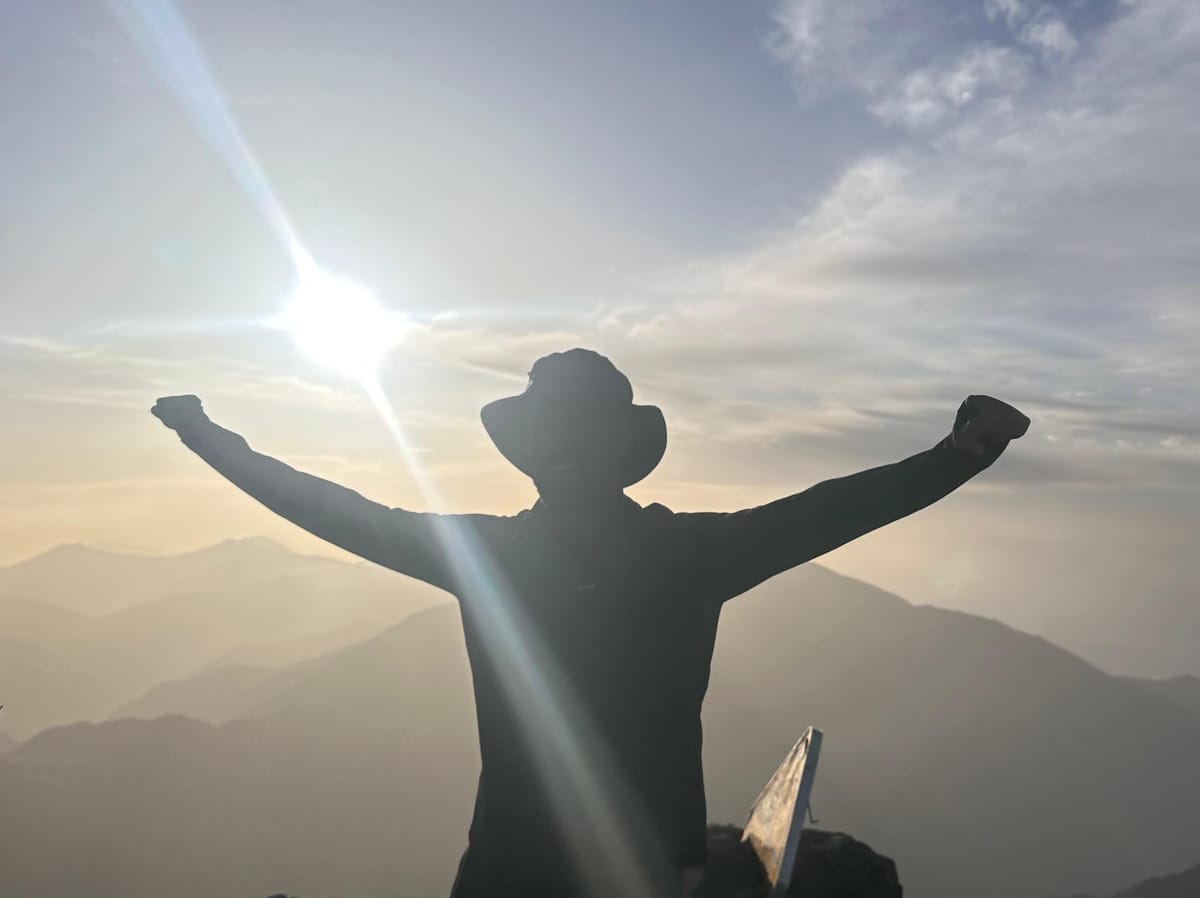
Four days off. No training. No idea what I was doing. Just me and the highest peak in North Africa
The Ad That Ruined My Vacation
Work had been demanding lately, some changes in my environment meant longer hours, tighter margins, less room to breathe. So when I finally got a week off to recuperate, I went back to Marrakech, my hometown. Bad move, if you know this city, you know summer here shows no mercy. I figured I'd spend my four remaining days somewhere colder, somewhere quieter. The universe had other plans.
It happened while I was scrolling Instagram one evening, doing my part to rot the last neurons left in my brain, when an ad for a Toubkal trip stopped my thumb mid scroll. Climbing the highest peak in North Africa had been sitting on my bucket list for years, gathering dust. Something about that scroll told me it was finally time. Call it manifestation, call it destiny, call it an algorithm that clearly knows me.
I sent the post to my brother, a tourism expert who'd already made it to the roof of Morocco himself, mostly to make sure I wasn't about to do something reckless. He checked around his network for a few minutes and came back with his answer: just go for it.
So I paid on the spot. No second thoughts, no research, no turning back. I wasn't prepared, not even a little. But who cares, I was born Ready.
Here's what the program actually got me: two guides from the region, transport from Marrakech to Imlil, a night in a maison d'hôte, tents near the basecamp, breakfast and dinner covered the whole way through. All of it, shockingly budget friendly. Whatever gear I didn't already own, I borrowed from my brother or added to a shopping list. Full breakdown at the end of this post, what earned its spot in my bag and what was dead weight.
Equipping a Video Game Character
I landed in Imlil in the afternoon and spent the first stretch just wandering, breaking my hiking shoes in on whatever incline I could find. A few of us made our way to a rental shop to pick up trekking poles and gloves, the last pieces of gear we still needed. Prices were fair, no complaints there.
That evening, the program organizer gathered us for the real briefing: the weather, the route, our two guides. Get a full night's sleep, he told us, 8 am start tomorrow.
We did not sleep. We had dinner, someone pulled out a deck of UNO, my first time ever playing, and afterward we wandered the village in the dark. That night ended up being one of the best parts of the whole trip, just talking, laughing, figuring out why each of us had signed up for this in the first place. Eight of us total, three women, five men, most of them younger than me. But one thing was already clear before Day 1 had even properly started, hiking attracts a good quality of people.
Tuna Cans and the Village of Crows
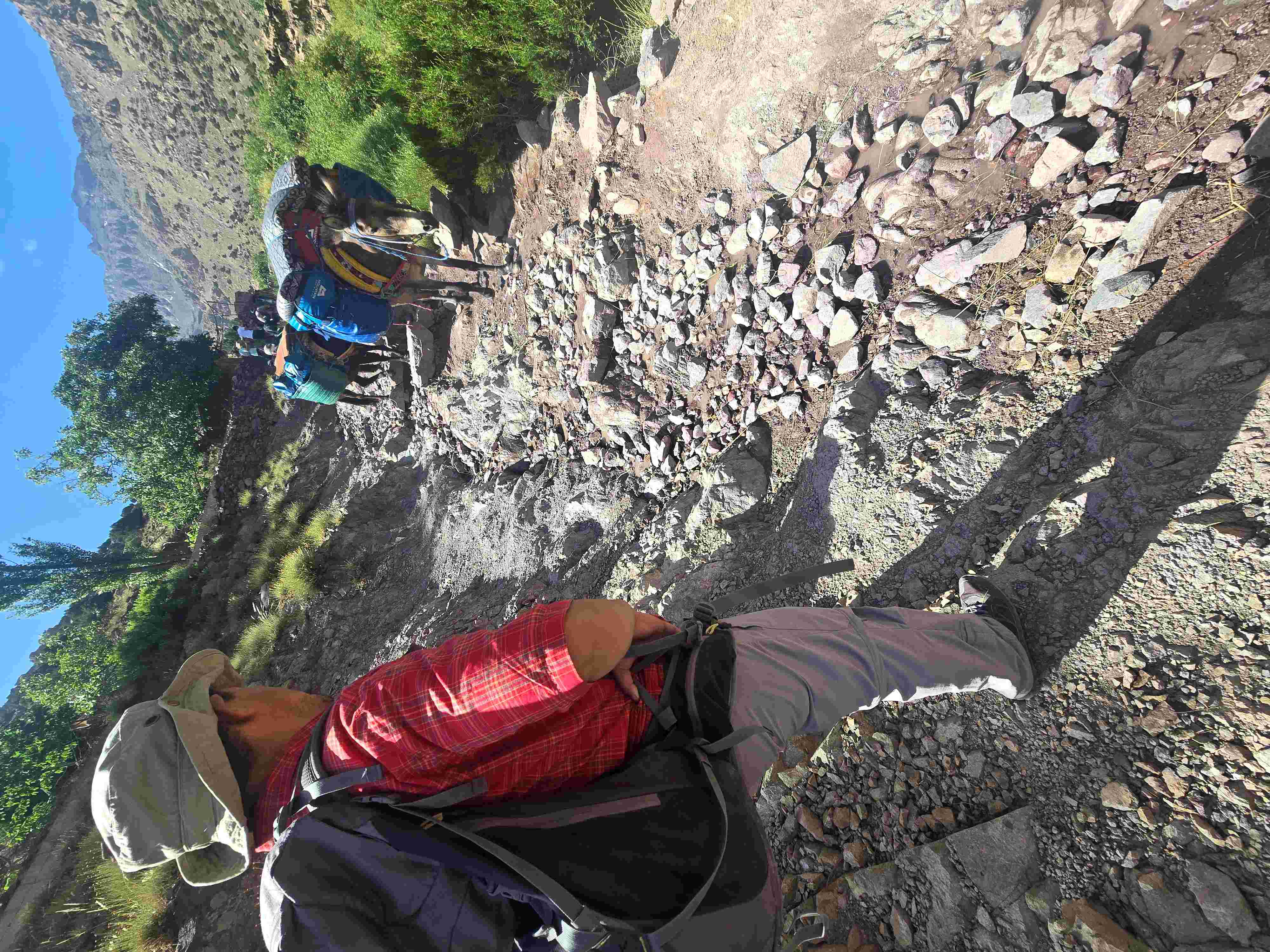
We woke up at 8, ate, and started walking. Quick tip before we go further: hire a mule for your backpack if you want to enjoy this relaxed. If carrying your own weight is part of the point for you, fine, do it.
Forty minutes in, we hit Aremd, a small village along the way. Nobody was tired yet, so we kept going, past the official Toubkal National Park sign, where an officer checks your ID before letting you continue. Along the path, locals press fresh orange juice and sell nuts and snacks. Stop for the juice. Trust me on this one.
Then came Chamharouch, the last village before the basecamp, and by far the strangest stop of the trip. Hundreds of crows circling overhead, going nowhere in particular. A giant rock painted white, a green and white flag tied to it, standing there like it's marking something sacred. You feel it before anyone tells you anything, this place means something. I asked the guide what the story was. He shut down instantly, gave me nothing. So I looked it up myself once I got home, and uncovered tales that would make Gandalf quietly back away. Go google it. You'll thank me, or you won't sleep, one of the two.
Below the village, a small waterfall and pool were begging to be jumped into. A few of the guys did exactly that. It looked incredible. But it was my first hike, I had zero energy to waste and even less desire to get separated from the group this early, so I watched, took mental notes, and kept walking.
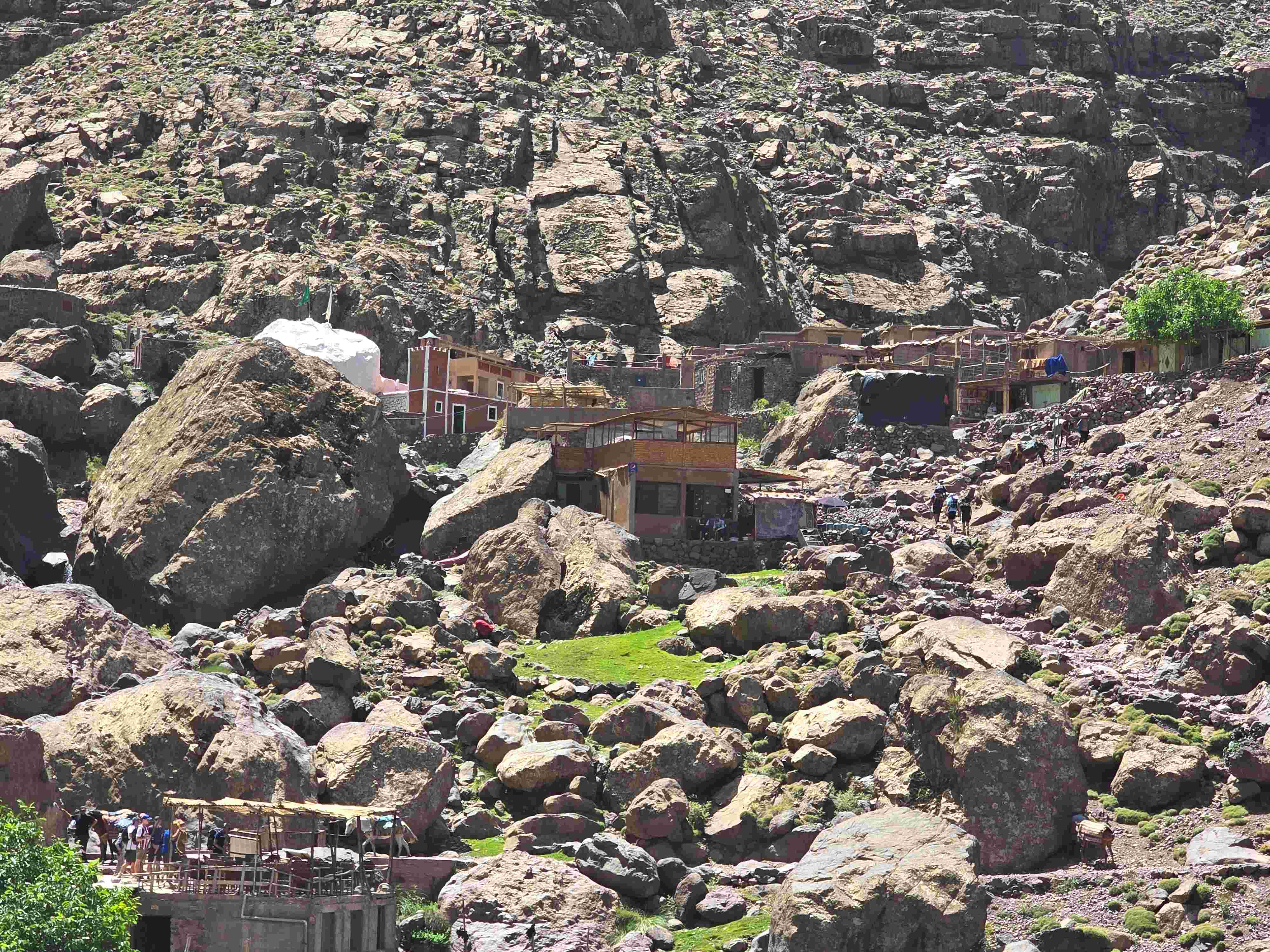
Lunch happened in Chamharouch, lentils, fries, a tomato and onion salad, rice. And this is where my tuna cans finally had their moment. I'd brought a few tuna cans with me, including a flavor I don't even eat back home, some Algerian sauce I grabbed on a whim, figuring I'd need something to survive the inevitable bread and biscotte phase. Turns out I was the only person in the group who'd planned that far ahead. The cans became the joke of the trip, and I made sure there was enough to go around.
The Insect, the Mule, and a Rock That Said Something True
We kept climbing, and I found myself genuinely amazed by the fauna and flora around us, plants and insects I was seeing for the first time in my life. I mentioned this to the guide, and he told me some people come out here specifically to photograph these creatures, he'd guided a few of them himself. We were still deep in that conversation when a massive insect flew straight into my eye and lodged itself there.
I started shouting. The guide told me to hold still, his hands were too dirty to go near my eye. Then he pulled out a 20 dirham bill, folded it to keep the edge sharp, and told me to relax and keep my eyes open. He went in with it and got the thing out clean. It felt like minor surgery performed with currency. Lesson learned, bring hiking glasses.
The insect wasn't the only hazard out there. Mules come barreling down the trail carrying supplies, tents, and packs, and if you're not paying attention, they will absolutely walk you off the edge of the mountain. The rule is simple: the second you see a mule, hug the mountain side or climb onto a rock and wait it out. It sounds dramatic, but honestly, it was funny every time, especially watching the person in front of me scramble for cover faster than I did.
We kept walking, and the views kept getting harder to describe. The mountains just sit there, enormous, and if you stare at them long enough something in your head goes quiet. Somewhere along that stretch, I stopped to catch my breath and noticed a rock with something written into it, just two words, no name, no date: struggle is art.
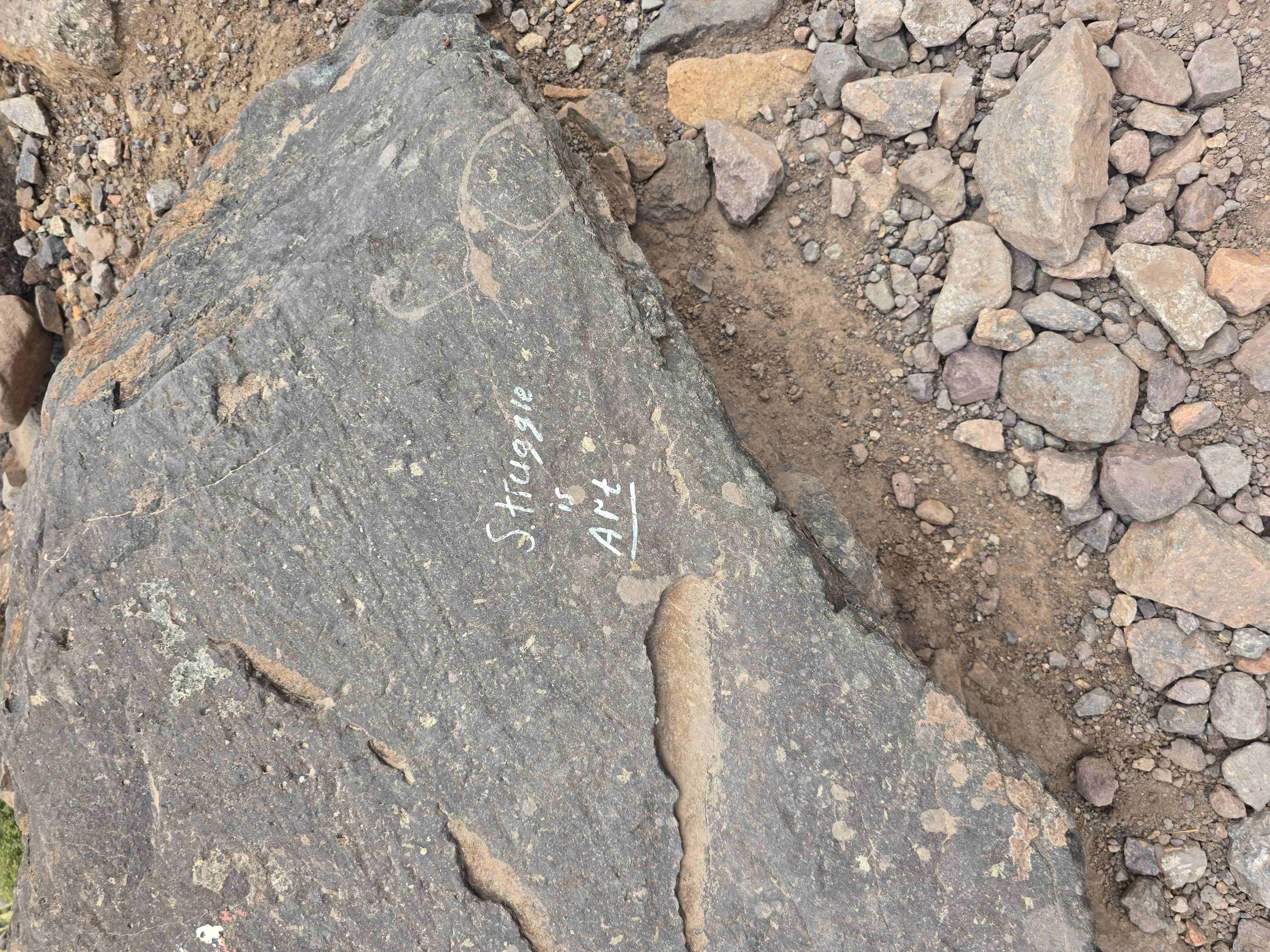
I stood there longer than I meant to. Who wrote it. When. Whether they were smiling or in pain when they wrote it. Whether they even made it to the summit, or turned back right there and left this behind instead. I had no way of knowing, and somehow that made it better. I kept walking with those two words stuck in my head, and I wouldn't fully understand them until the way down.
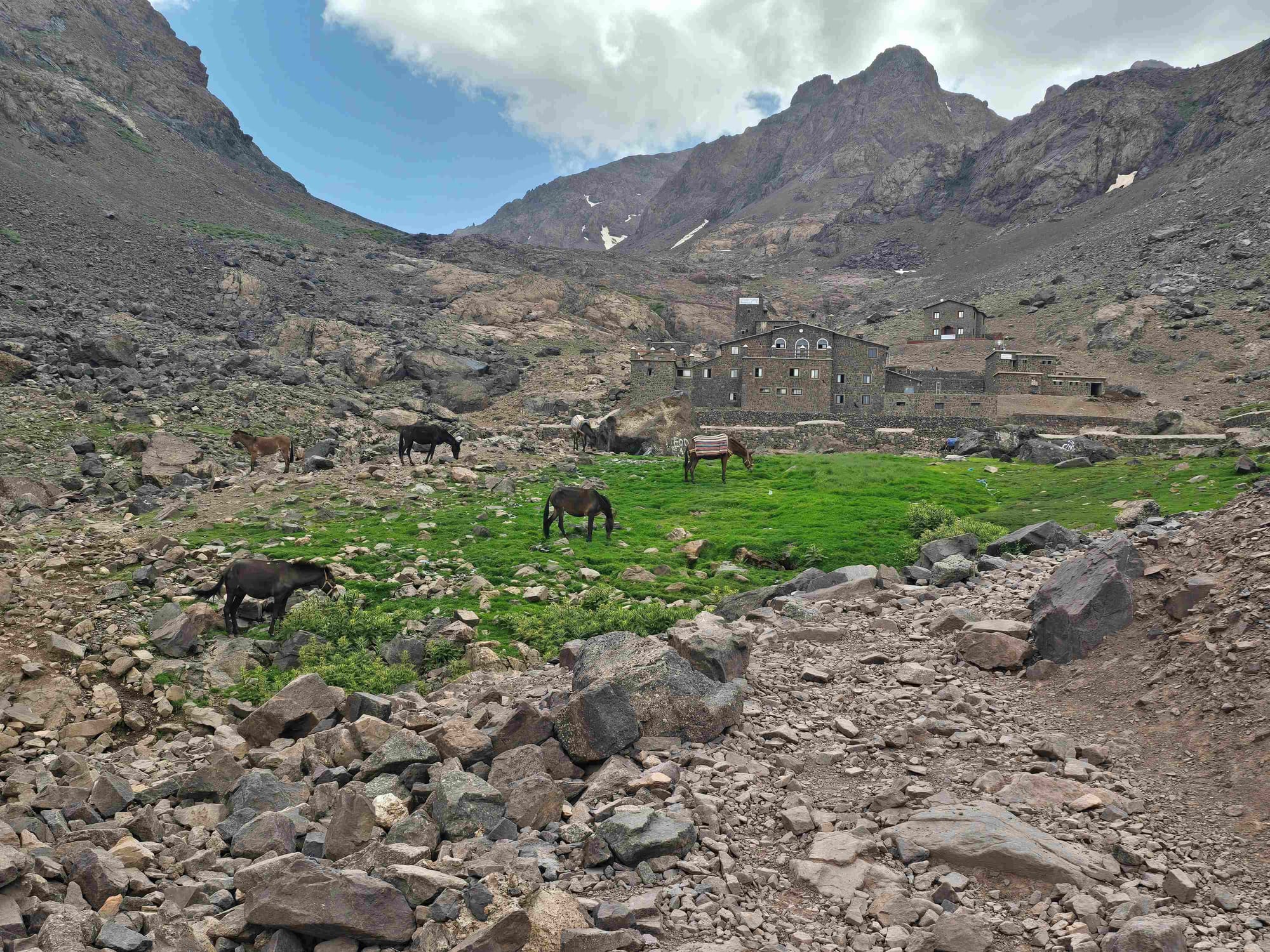
Eventually the refuge came into view, sitting at 3,207 meters, and for the first time all day my shoulders actually dropped. All the running I'd kept up out of stubbornness more than discipline, it was finally paying off. Reaching that refuge felt like the first real milestone of the trip, proof that my body could actually do this.
The Refuge
Once inside, we had time to breathe, recharge our phones, and enjoy the Moroccan tea, popcorn, and biscuits the staff had waiting for us. The basecamp felt like a small international gathering, people from different backgrounds, speaking different languages, all sharing the same thing without saying it out loud, everyone there wanted to become a better version of themselves. While we sat around resting, our guides quietly set up the tents for the night.
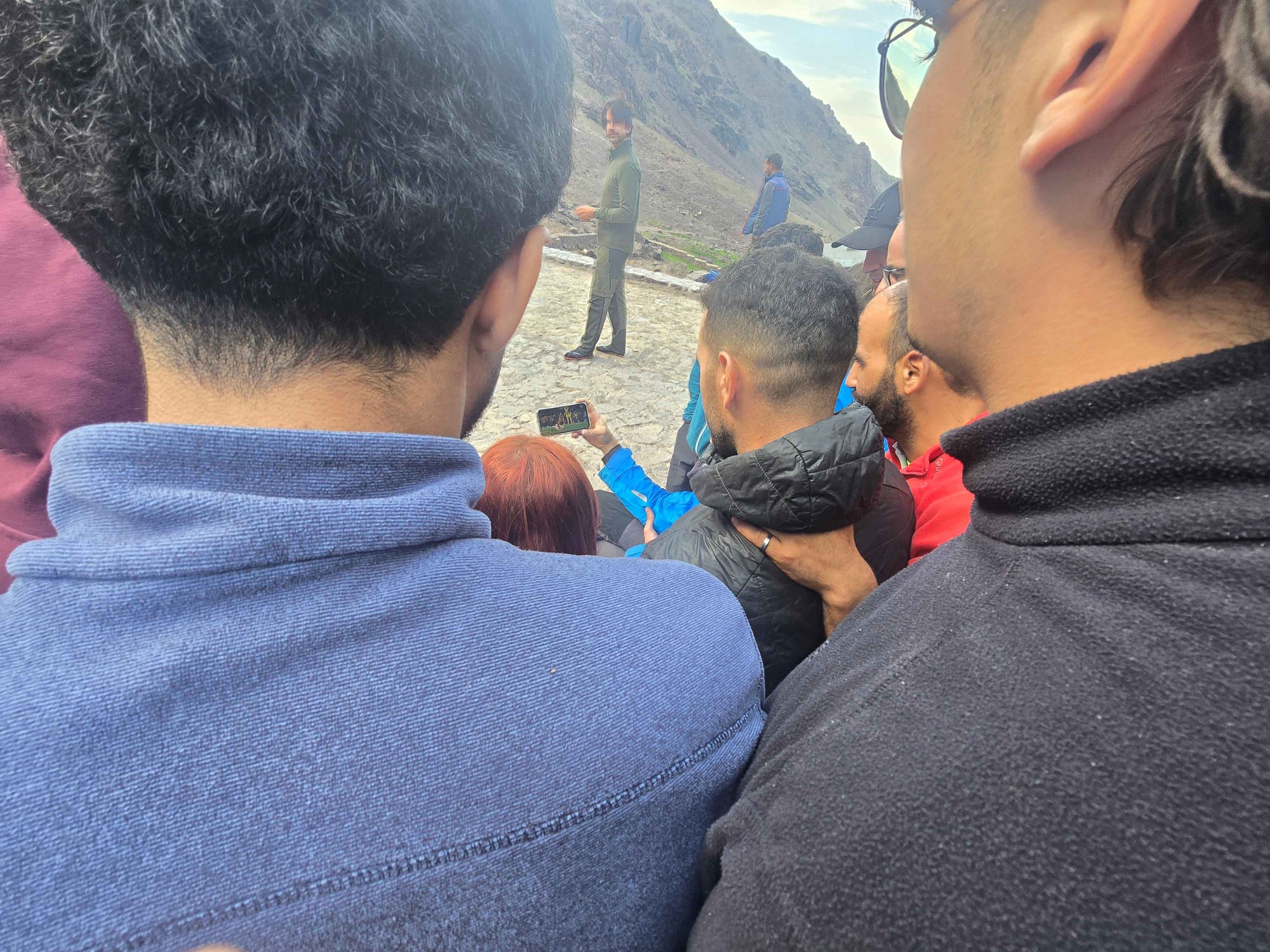
That evening, Morocco was playing Canada in the World Cup, and the entire refuge turned into a hunt for signal. Whoever managed to connect became an instant celebrity, a small crowd gathering behind their phone. Every time the national team scored, the whole basecamp shook with noise, pure unfiltered joy, people who'd never met an hour earlier hugging like old friends. When the match ended in our favor, the celebration kept going well past what made sense at that altitude.
Dinner was simple, a yellow soup, a chicken tagine drowning in onions and water, spaghetti in a basic tomato sauce straight out of a can. Nobody complained. Up there, you learn fast to be grateful for a meal you didn't have to carry on your own back or cook yourself.
That night we slept in tents next to a stream. I hadn't slept in a tent since I was a kid, camping near the ocean with my family, and the sound of the water brought all of that back at once. My tent partner and I walked over to a nearby rock and just lay there for a while, looking up. The sky was clear in a way I hadn't seen in years, every constellation sharp and obvious, like someone had finally turned the lights back on.
We ended up talking about nothing important and everything important at the same time, plants, the strange comfort of stepping away from a screen for a few days, why we'd both come out here chasing something we couldn't fully name. It was one of those conversations that only happens when you're tired enough to stop performing and just talk.
2:30 AM
We were up at 2:30, most of the group visibly struggling with the broken sleep. For me it barely registered, I spend half my life awake at odd hours anyway, so it felt almost normal. The early start wasn't random, it keeps you ahead of the weather, and there's nothing like reaching the summit right as the sun comes up over the clouds. We had a quick breakfast, strapped on our headlamps, and started walking.
I stopped thinking about where I was putting my feet almost immediately. The only thing in my head was the summit. It wasn't freezing like I expected, which turned out to be a problem, I started sweating fast and had to peel off my parka. My breathing got tight too, and that's where the running actually paid off. I fell back on something runners call zone two, breathing slow and controlled enough that your body stays efficient instead of burning out, and it just happened on its own, without me deciding to.
Our group split near the basecamp, a few people who'd already done Toubkal before headed off toward other summits with one of the guides. The rest of us kept climbing.
Two guys from our group drifted off to join another team somewhere along the way, and honestly, I got it, I was just as restless as they were. I just knew I had to pace myself if I wanted to make it up and back in one piece. I was a few meters behind two others, and about the same distance ahead of the rest of the group, when one of them suddenly stopped walking.
I went back to check. They could barely get words out, their breathing had turned into something closer to gasping. I tried to encourage them to push through, but they knew their own limits better than I did, and there was nothing left to say. It hit me harder than I expected, I wanted all of us up there together. The guide made the call, he'd stay back with them until they could breathe properly again and wait for the rest of us there. I left my backpack behind and kept going with just a half empty water bottle and a broken piece of a cereal bar.
Walking alone after that was unsettling, I'd lost sight of the other two by then, but the path was clear enough to follow. I climbed until I hit the ridge between two peaks, and from there I could finally see it, the small triangle marking the summit. It looked impossibly small from that distance. But seeing it did something to me, some kind of reset. I finished the last of my water. The cereal bar went to another hiker who looked worse off than I did and had nothing sweet left.
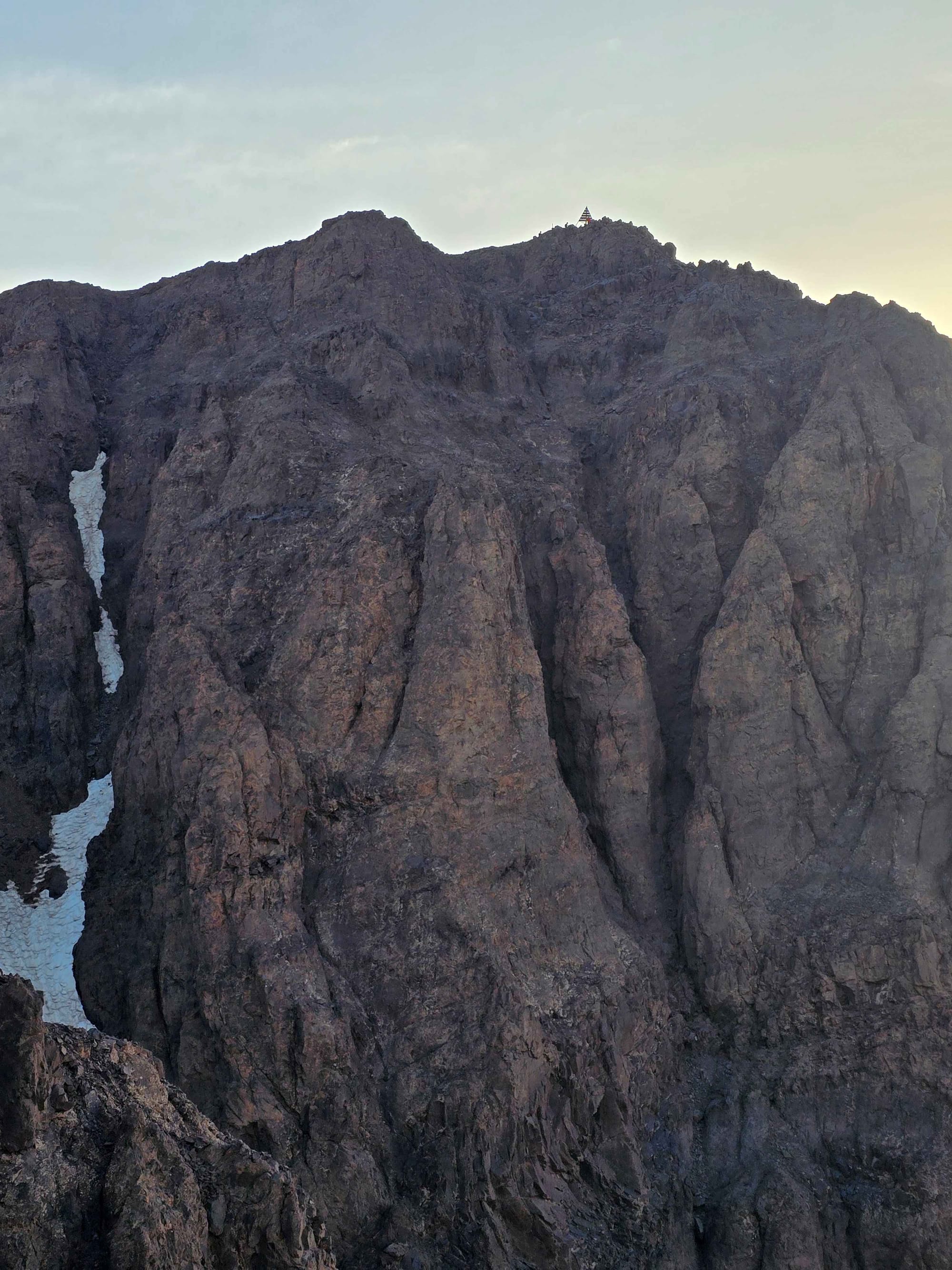
By the time people came into view near the top, my legs weren't really mine anymore, they just moved. My phone died just before I reached the summit, probably Strava quietly draining the battery the whole way up, but I wasn't worried, I had a tracker in my bag connected to my brother's phone, just in case anyone needed to find me. I reached the top. 4,167 meters, the highest point in the Atlas mountains and in all of North Africa, and for a few seconds none of that felt like a number, it just felt like standing on the edge of the continent itself. I found the two guys who'd made it up before me, and we celebrated together, photos, noise, the whole thing. A few minutes later the last two from our group arrived, and we did it all over again.
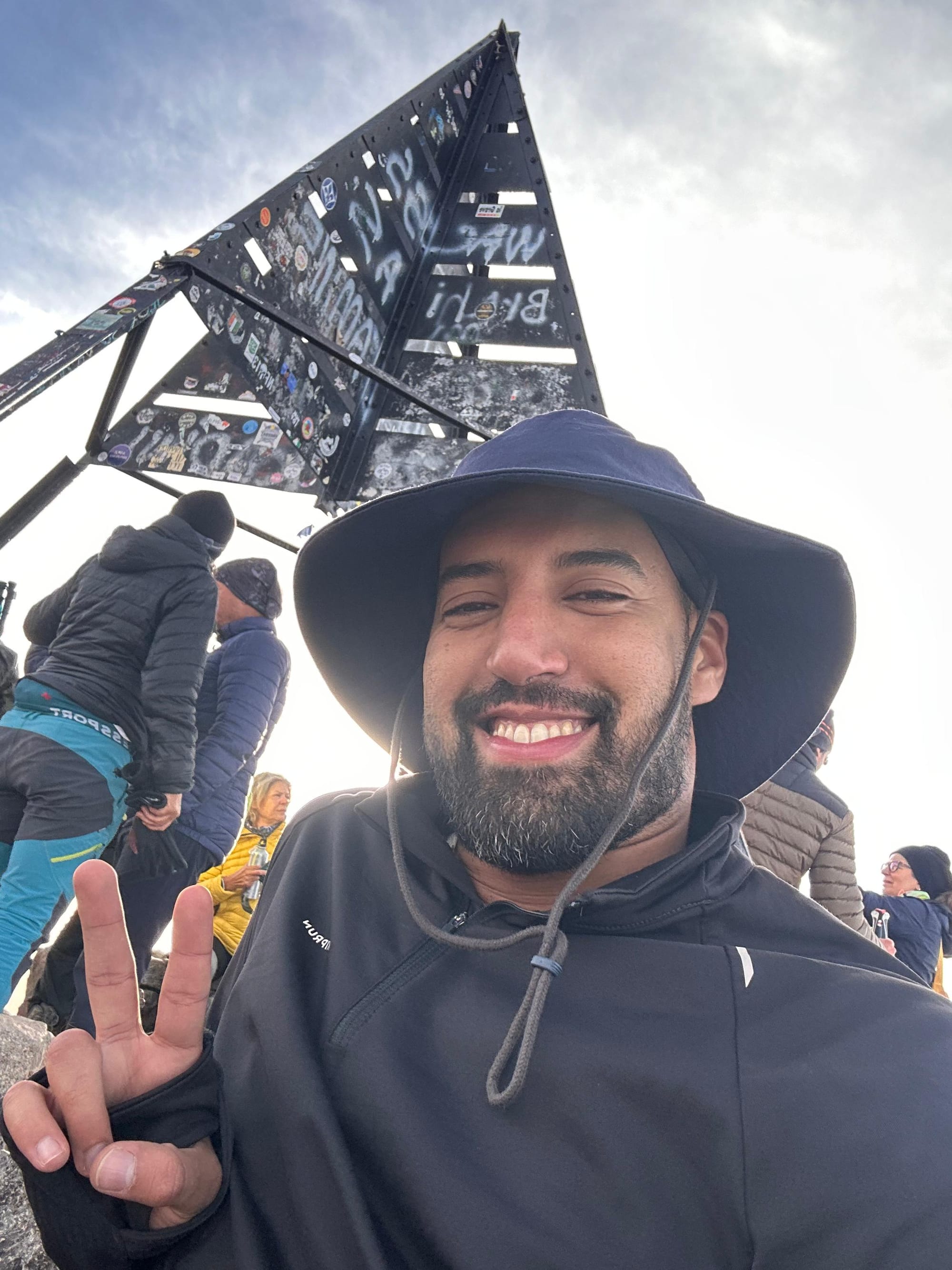
Standing up there, I felt something shift. I looked out over everything without a trace of fear, a feeling I hadn't had since my kickboxing days, sparring every Saturday like it was nothing. Somewhere in that moment I started thinking that fear might be the actual thing holding me back in life, not talent, not timing, just fear. And I thought about everything that could change if I let that go.
One guy caught my attention up there, sitting casually on a rock, smoking a cigarette like he'd stepped out for a break between meetings. At 4,167 meters. I didn't think much of it in the moment, just filed it away as one of those things you see on a mountain and can't quite explain.
The Mountain Doesn't Need You to Be Rigid
Then the nightmare started.
Climbing a mountain mostly takes stamina and decent breathing. Descending takes actual knowledge, mountain experience, and ideally a guide standing right next to you. I had one trekking pole. That was not enough, and I found out exactly how not enough within the first twenty minutes.
Nobody warns you that going down is harder than going up, especially in summer, when the trail turns into a minefield of loose pebbles. First slip, my brain went straight to I work on my feet for a living, please don't let this be the thing that breaks something, so I let my backside take the fall instead of my ankle. Not elegant, but functional.
Second slip, I hurt my hand. Mostly because I'd already given my gloves away to another climber who'd forgotten his, and my hands were overheating anyway, so it felt like the right call at the time. In hindsight, generosity has a cost, and that cost was skin.
Third slip sent me straight toward a rock, and I went down again, bracing with the same hand, and this one actually worried me, it felt like something in my tailbone had shifted. I stayed still for a second, hand bleeding, not too badly I hoped, and told myself this is just what adventure costs sometimes.
A woman passed by and asked if I was alright. I smiled and said everything was under control. It was not. But the lie felt necessary in the moment, the kind you tell yourself as much as you tell her. The two guys ahead of me were falling just as hard, so at least I had company in the misery, which somehow made every fall funnier than it had any right to be. I remembered a line I'd heard once, something Japanese, if you fall seven times, get up an eighth. So I got up, went slower, kept my eyes locked on my own feet.
That's when a group of hikers from Portugal caught up to me, their guide leading from the front. He told me to let my legs move naturally, the mountain doesn't need you to be rigid. I told him I was too scared of falling again to loosen up. He asked where my own guide was, I explained the situation, and somewhere in that exchange he picked up on my accent and realized we were both from Marrakech. Small world, apparently, even at four thousand meters. He let me fall in with his group for a while, told me to aim for the bigger rocks, and for a stretch, it actually worked.
Eventually we separated again, and my sense of direction, never great to begin with, gave out completely. We'd climbed in the dark on the way up, so I had no memory of the terrain to retrace on the way down. At some point I ended up somewhere thick with vegetation and no sign anyone had passed through recently, and for a second I genuinely felt like the first person to ever set foot there.
Then a woman's voice, telling me in Darija to follow the rocks dusted white. Her guide just told me to go back the way I came, which wasn't exactly useful advice given that I had no idea which way that was. I followed them for a bit, lost the trail again, found it again, lost it again. At one point I was just standing there thinking left, right, or straight through, like I was navigating on instinct alone instead of any actual sense of direction.
Eventually the basecamp came back into view, and I nearly cheered out loud. That's when I spotted him again, the same guy from the summit, walking down at his own pace like the whole mountain owed him nothing. And now that I could actually see him properly, I realized just how unbothered he really was. Converse sneakers. Jeans. A polo shirt, tucked in. No hiking boots, no poles, no layers, nothing that suggested he'd read a single word of the packing advice anyone gives you before this climb. Meanwhile I was bleeding from one hand and negotiating with my own tailbone. Mountains have a way of humbling you fast. Your worst moment up there is someone else's easy afternoon, and apparently also someone else's regular Tuesday outfit.
Getting back to the refuge felt like the first real relief of the day. I traded my boots for the slippers I'd packed, made the best cup of coffee I've had in a long time, and sat with the rest of the group swapping stories while we waited for the others to make it back from their own summit.
The walk back to Imlil felt almost gentle by comparison, guides beside us, mules carrying the bags this time. When I told our guide about everything that had gone wrong on the way down, he just nodded and said summer descents are actually worse than winter ones, in winter your crampons grip the snow, in summer you're just sliding on rocks and hoping.
The Mountain Doesn't Care About Your Monday
By the time we reached Imlil, the whole group had gone quiet in that good way, the kind where nobody needs to fill the silence anymore. We piled into the van together for the ride back to Marrakech, and somewhere on that road, watching the mountains shrink behind us, the whole thing started to feel less like something happening to me and more like something that had already happened.
Getting back to Marrakech didn't mean getting to rest. I had work the next morning, so I drove four hours through the night and showed up exhausted, sore in places I didn't know could be sore, running purely on momentum. And somewhere in that drive, tired enough to stop pretending, I kept circling back to the same thought: how strange it is that we build entire lives around rigid schedules and offices, when three days on a mountain reminded me how much freedom actually feels like. The world keeps changing, but the way we work barely moves with it.
What I Actually Walked Away With
The mountain didn't just test my legs. It handed me a few things I didn't expect to bring home.
I didn't prepare for any of this, and maybe that's the point. No training plan, no gear list drafted weeks in advance, just a message to my brother and a decision made mid scroll. Some of the best things you'll do won't wait for you to feel ready. You build the readiness on the way up.
And if Toubkal did this to me, I can't stop thinking about what a mountain like Everest would demand. Guides do this climb hundreds of times. For them, it's not an adventure, it's just another day at work. Makes you wonder what real mastery actually costs, and how much of what looks impossible to us is just someone else's normal.
Struggle is art, and I think I finally understand why. I found that phrase carved into a rock partway up, no name attached. Art isn't the clean version of anything, it's the version with the mistakes still visible, the parts that didn't go according to plan. The mess is usually the part worth remembering, not the polished summit photo.
People will help you and you'll never fully know why. A guide, a stranger who shared an accent, a woman offering directions in passing. None of them owed me anything. You don't plan for that kind of help, you just have to be lucky enough to be in its path.
Community shows up in the strangest places. Strangers losing their minds together over a football score, at 3,207 meters, in tents, with nothing in common except being there. None of us were there for each other, technically. And yet somehow we were.
Freedom doesn't need a mountain, but a mountain is a good reminder of what it feels like. Three days without a schedule, and I came back thinking harder about the shape of my ordinary life than I have in a long time. It's not really about Toubkal. It's about noticing how alive you feel when the rules briefly disappear.
As promised at the start, here's the full breakdown:
What Earned Its Spot
Footwear & feet
- Good quality trekking shoes
- Two extra pairs of socks, your feet will get wet at some point
- Small tube of vaseline, saves your feet and thighs from friction
- Blister patches for your heels
Clothing
- Three layers: cotton base, fleece middle, waterproof shell
- Extra underwear
- Pajamas and one spare t-shirt
- Lightweight waterproof gloves
Gear
- Two trekking poles
- Hiking glasses, non negotiable after what happened to my eye
- Headlamp
- Power bank, you'll want your phone alive for the summit, not just Strava
- Trash bags, keep your shoes dry overnight and organize your stuff
- Disposable slippers for the refuge
- Toilet paper, non negotiable, don't assume it'll be there when you need it
Food & drink
- A water bottle
- A coffee mug
- Instant coffee
- One or two cereal bars
- Tuna cans, just in case
Safety & essentials
- Small first aid kit: paracetamol, something for diarrhea, alcohol for cuts, keep it light
- A belt bag for cash, ID, and a tracker, worth keeping on you even while sleeping
What Was Dead Weight
- Chocolate bars or anything that melts
- Too much food, you can buy what you need in Imlil, along the trail, or at the refuge, though pricier there
- Worrying about water, you'll find it along the whole route
- Your own sleeping bag or tent, better to rent locally or sleep in the refuge
- Books, a Kindle, headphones, you'll want the silence for the stars and the conversations instead
- Too many clothes, every gram counts more than you'd think
PS: I tracked the whole route on Strava, feel free to add me, and maybe one day we can lose our way together on some other mountain.